
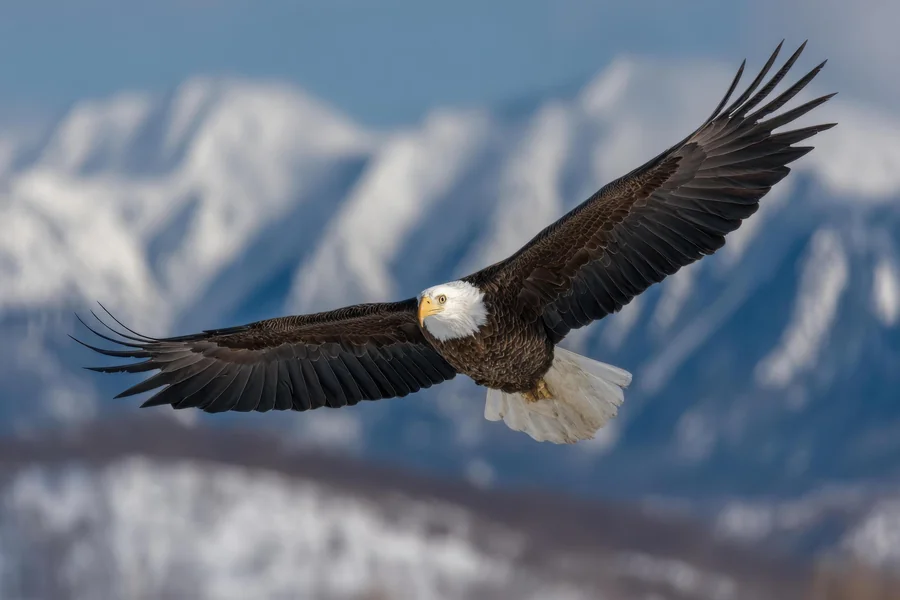
Eagles and Their Mountain Environment
Eagles flying above mountains create one of the most impressive scenes in the natural world. With broad wings spread against the sky, these powerful birds can travel across cliffs, valleys, forests, and rocky peaks while using the landscape to their advantage. Their ability to remain airborne for long periods allows them to search for food and move through large territories without constantly flapping their wings.
Mountain environments can be challenging for wildlife. Temperatures may change quickly with elevation, winds can become powerful around ridges, and food may be spread across difficult terrain. Eagles have developed physical and behavioral adaptations that help them handle these conditions.
Different eagle species occupy different habitats, ranging from mountain forests to open alpine regions. Their preferred environment depends on factors such as available prey, nesting locations, climate, and elevation. For people who enjoy learning about animals and wildlife, natureanimalhub offers another place to find animal-related information and nature content.
How Eagles Use Mountain Winds
One of the most remarkable aspects of eagle flight is the ability to use rising air currents. Mountains naturally influence wind movement, and air flowing upward along slopes can provide lift for soaring birds.
Instead of continuously flapping their wings, eagles can spread their broad wings and allow rising air to carry them upward. This method of flight saves energy and helps them remain airborne while searching the landscape below.
Thermal currents can also assist soaring. When sunlight warms the ground, heated air rises and creates columns of upward-moving air. Eagles can circle within these currents and gradually gain altitude.
Ridge soaring is particularly useful in mountainous regions. Wind hitting a mountain slope is forced upward, creating an area of rising air that a bird can use to maintain or increase its height.
This combination of wing shape, body control, and environmental awareness makes soaring highly efficient. An eagle may appear to glide effortlessly, but its flight involves constant adjustments to wing position, direction, and speed.
Physical Adaptations That Support Flight
An eagle’s body is designed for powerful and controlled flight. Large wings provide lift, while strong muscles allow the bird to flap rapidly when it needs to gain speed or altitude.
The shape of the wings varies among eagle species. Some species have relatively broad wings that are useful for soaring, while others have wing shapes that support maneuverability in forests or mountainous terrain.
Strong legs and sharp talons are also essential. Eagles use their feet to capture and carry prey, sometimes grabbing animals while flying or approaching them from above.
Their hooked beaks help them tear food into manageable pieces. Excellent eyesight is another major advantage. Eagles can detect movement from considerable distances, helping them locate potential prey across open landscapes.
Feathers also play a vital role. The arrangement of flight feathers allows eagles to control lift, direction, and braking. By changing the position of their wings and tail feathers, they can make precise adjustments while flying through changing air currents.
Together, these adaptations allow eagles to function effectively in environments where strong winds, steep cliffs, and uneven terrain create constant challenges.
Searching for Food From the Sky
Mountain landscapes can provide eagles with a wide variety of prey. Depending on the species and region, their diet may include mammals, birds, reptiles, and other animals.
Soaring provides an excellent way to search for food. From high above the ground, an eagle can survey large areas while using relatively little energy. Its exceptional eyesight helps it identify movement below.
Once potential prey is spotted, the eagle can change its flight pattern. It may descend gradually, circle closer, or make a rapid dive depending on the situation.
Mountain terrain can create natural hunting opportunities. Rocky cliffs, open slopes, valleys, and forest edges may contain prey animals moving between feeding or shelter areas.
Eagles do not necessarily hunt every time they fly. Flight can also be used to travel between territories, locate nesting areas, avoid threats, or simply move through their environment.
Food availability influences how far an eagle may travel. When prey is abundant, it may remain within a familiar territory. When food becomes scarce, longer flights may be necessary.
This ability to cover large distances gives eagles access to widely distributed resources and helps them survive in landscapes where food may not be evenly available.
Eagles and High-Altitude Landscapes
Mountain regions can range from forested valleys to barren rocky peaks. Eagles may use different elevations for different purposes.
Lower elevations can provide forests and grasslands where prey is more abundant. Higher areas may offer strong winds and excellent visibility for soaring. Cliffs can provide secure locations for nesting and resting.
Not every eagle species regularly flies at the same altitude. Environmental conditions, weather, season, and local geography all influence flight patterns.
High-altitude flight can also expose birds to lower temperatures and reduced air density. Eagles compensate through powerful flight muscles, efficient wing use, and careful management of their energy.
Weather can change quickly in the mountains. Clear skies may suddenly give way to clouds, rain, snow, or strong winds. Experienced birds must respond to these conditions while maintaining control.
The landscape itself can guide movement. Valleys can channel wind, while ridges can create rising air. Eagles may take advantage of these natural features when traveling across large mountain ranges.
Nesting on Cliffs and Rocky Slopes
Many eagles choose elevated nesting locations that provide protection and a wide view of the surrounding area. Cliffs, rocky ledges, tall trees, and other elevated structures can serve as nesting sites depending on the species.
A high nest can reduce access for many ground-based predators. It may also give adult eagles an unobstructed view of the surrounding territory.
Building and maintaining a nest can require considerable effort. Eagles may use branches, vegetation, and other materials to create a large structure. Some species reuse nests for many years, adding new material over time.
Parents play an important role in raising their young. They provide food, protect the nest, and help young birds develop the skills needed for independent life.
Young eagles must eventually learn to fly. This process involves developing strength, balance, coordination, and confidence. The surrounding cliffs and open air provide a demanding but natural environment for learning.
The first flights of a young eagle are important milestones. Over time, the bird learns how to control its wings, respond to wind, land safely, and eventually search for food independently.
The Role of Eagles in Mountain Ecosystems
Eagles are important predators within many ecosystems. By feeding on other animals, they participate in natural food webs and contribute to the balance of wildlife populations.
Their presence can indicate that an area provides suitable habitat and sufficient prey. However, the ecological role of an eagle varies according to its species and local environment.
Eagles interact with many other animals. Their prey may include small mammals and birds, while other predators may compete with them for food.
Scavenging can also play a role in the diet of some eagles. Taking advantage of available carcasses can provide an energy-efficient food source when hunting opportunities are limited.
Because eagles occupy relatively high positions in food webs, environmental changes can affect them indirectly. A decline in prey populations, habitat disturbance, or changes in nesting areas can influence eagle populations.
Protecting healthy mountain ecosystems therefore benefits not only eagles but also the many species that share the same landscape.
Threats and Conservation of Mountain Eagles
Eagles can face different challenges depending on where they live. Habitat destruction, disturbance near nesting sites, pollution, reduced prey availability, and human infrastructure can affect some populations.
Mountain development can alter important habitats. Roads, buildings, power infrastructure, and other changes may disturb nesting areas or affect traditional flight routes.
Pollution can also create problems for birds of prey. Certain contaminants can accumulate through food chains and affect wildlife health and reproduction.
Protecting nesting areas is an important conservation strategy. Limiting unnecessary disturbance around active nests can give adult birds and their young a safer environment.
Maintaining natural habitats is equally important. Healthy forests, grasslands, rocky areas, and prey populations provide the resources eagles need throughout their lives.
Conservation programs may also involve population monitoring and scientific research. Tracking eagle movements can help researchers understand migration routes, hunting areas, nesting territories, and potential environmental threats.
Public awareness can contribute as well. Responsible wildlife observation allows people to appreciate eagles without disturbing their natural behavior.
Final Thought
Eagles flying above mountains represent the remarkable relationship between wildlife and the natural environment. Their broad wings allow them to use rising air currents, while their powerful muscles, sharp talons, and exceptional eyesight support their life as skilled predators.
Mountain landscapes provide eagles with important resources, from nesting cliffs and forest habitats to open hunting grounds and powerful winds. Every flight is influenced by the terrain and weather around them.
Their survival also depends on healthy ecosystems. Protecting mountain habitats, nesting sites, prey populations, and natural landscapes can help maintain the conditions these magnificent birds require.
Watching an eagle glide across a mountain sky may look effortless, but the scene represents millions of years of adaptation. Their ability to turn wind and landscape into tools for survival makes them one of nature’s most impressive examples of aerial skill.
FAQs
Why do eagles fly above mountains?
Eagles fly above mountains to search for food, travel across their territories, reach nesting areas, and take advantage of rising air currents.
How do eagles stay in the air without constantly flapping?
Eagles can spread their wings and use thermals and rising air created by mountain slopes to gain lift and remain airborne while conserving energy.
What do mountain eagles eat?
Depending on the species and region, eagles may eat mammals, birds, reptiles, and other available animals.
How good is an eagle’s eyesight?
Eagles have exceptionally strong vision that helps them detect movement and potential prey from considerable distances.
Why do eagles build nests on cliffs?
Cliffs and other elevated locations can provide protection from many ground predators and offer a broad view of the surrounding territory.
Can eagles fly at high altitudes?
Yes, some eagles can fly at high elevations, although the altitude they use varies according to species, weather, geography, and available resources.
How do mountain winds help eagles?
Winds that rise along mountain slopes can provide lift, allowing eagles to soar with less energy than continuous powered flight would require.
Are eagles important to mountain ecosystems?
Yes, eagles can play an important role as predators within mountain food webs and interact with populations of various prey species.
What threats do mountain eagles face?
Potential threats include habitat loss, disturbance near nests, pollution, reduced prey availability, and human infrastructure, depending on the species and region.
