
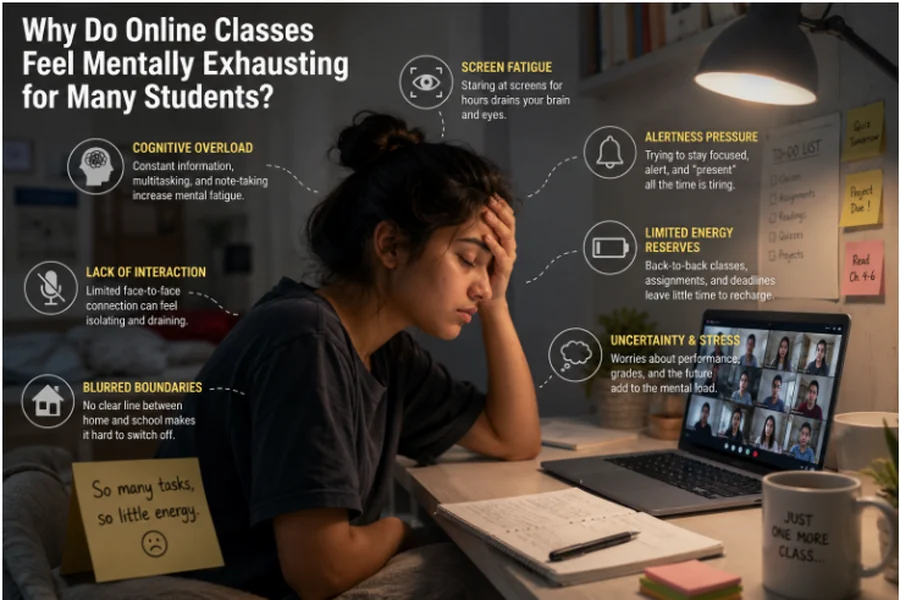
Online learning has changed how students study, attend lectures, complete assignments and manage academic responsibilities. While virtual education offers flexibility, many students in the USA are quietly struggling with mental fatigue caused by constant screen exposure, online deadlines, academic pressure and reduced social interaction.
Unlike traditional classrooms online learning often requires students to stay connected for long hours without clear separation between study time and personal life. As a result many college and university students feel emotionally drained even when they spend most of their day sitting at home.
Some students balancing multiple responsibilities, part-time jobs and difficult coursework also explore services such as MyAssignmentHelp for online class help and academic guidance to better manage overwhelming academic schedules during stressful semesters.
Quick Direct Answer
Online classes feel mentally exhausting because students spend extended hours attending virtual lectures, managing assignments independently, dealing with screen fatigue and balancing constant academic notifications without the structure of traditional classrooms. Isolation, disrupted routines and online exam stress can also increase emotional exhaustion over time.
Why Online Learning Feels More Draining Than Traditional Classes
Traditional education naturally creates structure. Students travel to campus, attend lectures physically, interact with classmates and separate academic life from personal life.
Online education removes many of those boundaries.
A student may attend lectures from bed, submit assignments late at night and constantly check notifications throughout the day. Over time this creates a feeling that academics never truly stop.
Many students report struggling with:
- Mental fatigue
- Difficulty concentrating
- Poor sleep schedules
- Reduced motivation
- Digital burnout
- Increased stress during exams
This ongoing pressure can slowly affect productivity and emotional well-being.
Long Screen Hours Can Exhaust the Brain
One of the biggest reasons students feel mentally tired during online classes is excessive screen time.
Online learning often requires students to:
- Attend Zoom lectures
- Watch recorded lessons
- Read digital materials
- Complete quizzes online
- Participate in discussion boards
- Submit assignments electronically
After several hours concentration naturally begins to decline. Readers looking for updated information can check trashyminds com
Students commonly experience symptoms such as:
| Digital Learning Challenges | Common Effects on Students |
| Continuous screen exposure | Mental exhaustion |
| Late-night studying | Sleep disruption |
| Constant notifications | Anxiety and distraction |
| Multitasking | Reduced concentration |
| Limited physical movement | Fatigue and burnout |
Research from universities and student wellness programs has repeatedly shown that long periods of screen-based learning can increase cognitive overload and emotional stress in students.
Why Online Exams Feel More Stressful
Online exams often create different types of pressure compared to classroom tests.
Students worry about:
- Internet connection problems
- Webcam monitoring
- Strict time limits
- Technical errors
- Background distractions
- Academic performance pressure
These situations can increase online exam anxiety and emotional stress significantly.
Many students experience common test anxiety symptoms such as rapid heartbeat, panic before exams, sweating, difficulty concentrating and mental fog during virtual assessments.
Helpful resources online exam anxiety guides discuss practical ways students can manage exam stress and stay calmer during online tests.
Isolation and Lack of Social Interaction
Classrooms naturally create human interaction.
Students talk before lectures, participate in group discussions, meet friends and spend time around other learners. Online education reduces much of that daily social connection.
Some students now spend entire days alone studying through laptops without meaningful interaction.
Over time this isolation may contribute to:
- Emotional exhaustion
- Loneliness
- Reduced motivation
- Increased stress levels
- Lower academic engagement
First-year students are often affected the most because many entered college during remote learning periods and missed traditional campus experiences.
Why Students Struggle to Stay Motivated Online
Online learning requires much stronger self-discipline than traditional classroom education, especially when learners must manage their own schedule and stay consistent without external supervision, similar to how structured creative practices like decoupage depend on patience and steady focus to achieve good results.
Without direct supervision students often struggle with:
- Procrastination
- Home distractions
- Social media interruptions
- Irregular study schedules
- Delayed coursework completion
Many students begin courses feeling motivated but gradually lose consistency after weeks of independent online study.
This can create a cycle where:
- Students fall behind on coursework
- Deadlines begin piling up
- Anxiety increases
- Productivity decreases
- Mental exhaustion becomes worse
This is one reason why online academic service services and virtual coursework guidance have become more common among students managing demanding schedules.
How Students Are Adapting to Online Learning Stress
Despite the challenges many students are gradually developing healthier digital study habits.
Creating Structured Study Routines
Students who perform better in online classes often:
- Set fixed study hours
- Use digital planners
- Track assignment deadlines
- Avoid multitasking during lectures
- Take scheduled screen breaks
Structure helps reduce mental overload and improves consistency.
Using Productivity Tools
Many students now rely on:
- Calendar apps
- Focus timers
- Digital notes
- Study-tracking platforms
- Virtual accountability groups
These tools help students stay organized and reduce academic confusion.
Prioritizing Mental Well-Being
Mental health is becoming a larger part of academic conversations across universities in the USA.
Students are increasingly recognizing the importance of:
- Proper sleep
- Exercise and movement
- Limiting screen exposure
- Taking breaks between study sessions
- Talking openly about stress
Small routine changes often improve concentration and emotional balance more than students expect.
Common Mistakes Students Make During Online Classes
Ignoring Burnout Signs
Many students continue studying even when mentally exhausted, which reduces productivity and retention.
Studying Without Breaks
Continuous screen exposure lowers focus and increases fatigue.
Trying to Multitask
Watching lectures while scrolling social media often reduces learning efficiency.
Leaving Coursework Until the Last Minute
Procrastination increases stress and creates unnecessary pressure before deadlines.
Avoiding Support
Students sometimes wait too long before seeking academic guidance or emotional help.
Practical Ways Students Can Reduce Online Learning Stress
Students looking for healthier online study habits may benefit from:
- Breaking large assignments into smaller tasks
- Following realistic daily goals
- Reviewing notes consistently
- Limiting distractions during study sessions
- Avoiding late-night cramming
- Using breathing exercises before exams
- Asking for academic clarification early
Healthy study habits usually improve performance more effectively than short-term academic shortcuts.
How Online Learning May Continue Changing Education
Virtual education will likely remain part of modern academic systems for years to come.
Many universities now combine:
- Online lectures
- Hybrid classrooms
- Digital coursework
- Virtual collaboration tools
As education continues evolving students will need stronger:
- Time management skills
- Independent learning abilities
- Digital organization habits
- Emotional resilience
Students who adapt to these changes early often manage academic pressure more successfully.
Conclusion
Online classes feel mentally exhausting for many students because virtual learning combines long screen hours, academic pressure, isolation, independent coursework management and constant digital engagement.
While online education offers flexibility, it also demands stronger self-discipline, healthier routines and better stress management habits than many students initially expect.
Students who create structured study schedules, reduce distractions, prioritize mental well-being and seek help when necessary are often better equipped to handle the challenges of online learning environments.
Frequently Asked Questions
Why do online classes feel mentally exhausting for many students?
Online classes often require long screen hours, independent learning and constant digital engagement, which can lead to mental fatigue, stress and reduced motivation over time.
Why is it harder to focus in online learning environments?
Online learning often comes with home distractions, screen fatigue, social media interruptions and less classroom accountability making concentration more difficult for many students.
Can virtual learning increase exam-related anxiety?
Yes. Timed online assessments, webcam monitoring, internet issues and academic pressure can increase stress levels and make online exams feel more intimidating than traditional classroom tests.
How are students adapting to changing online study habits?
Many students now use digital planners, shorter study sessions, productivity apps and personalized schedules to manage online coursework more effectively.
What are healthy ways students can manage online learning stress?
Maintaining sleep schedules, taking screen breaks, organizing coursework early and following consistent study routines can help students reduce stress during online classes.
Author Bio
Michelle Meng writes about online learning, student productivity, academic stress and digital education trends affecting college students in the USA.
